by Editor | Nov 1, 2008 | Africa, Kenya, Simon and Baker Travel Review
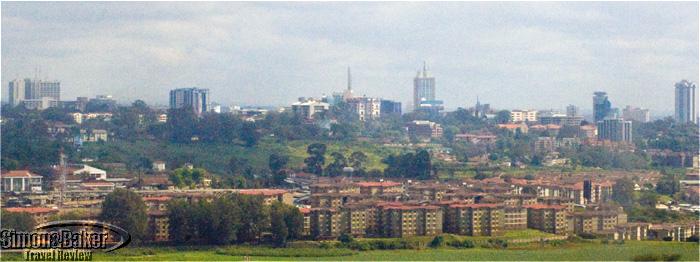
Kenya is a land of contrasts; a mosaic of cultures developed through millennia of rich history, scattered throughout a 225,000 square mile area (582,650 square kilometer; roughly the size of Texas), with a population of 38 million representing over a dozen main tribal groups. Many have retained their ancestral traditions from the Swahili sailing their ancient dhows along the coastal waters of the Indian Ocean to the Masai still herding their cattle across the wide open spaces of the southwest of the country. The topography of the land is equally varied and offers some of the most stunning landscapes in Africa. The country sits astride the equator on the eastern coast of Africa. From a 333 mile (536 kilometer) coastline of tropical beaches melting into the Indian Ocean it rises toward the west to the mile-high plateau of Nairobi and central highlands culminating at the snow-capped peak of Mount Kenya, 17,058 feet (5,200 meters) above sea level. Further west, the land slopes down again toward Uganda, Lake Victoria and Tanzania to the south, to become arid red-dust plains and sun-baked savannah teaming with some of the most spectacular wildlife in the world.
by Editor | Nov 1, 2008 | Africa, Kenya, Nairobi, Simon and Baker Travel Review
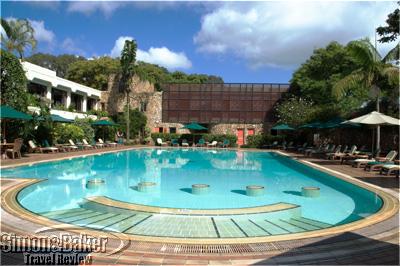
Nairobi was the last stop on my recent Kenya itinerary. After two weeks in the glorious isolation of remote bush camps, I wanted to ease back into the modern world before boarding the long flight home. The Nairobi Serena Hotel proved to be the ideal retreat for my transition. Located at the edge of the city’s Central Park and surrounded by its own lush tropical gardens, the Nairobi Serena offered an oasis of serenity in the heart of Africa’s fourth largest, and one of its most vibrant, cities.
by Editor | Nov 1, 2008 | Africa, Kenya, Masai Mara, Simon and Baker Travel Review
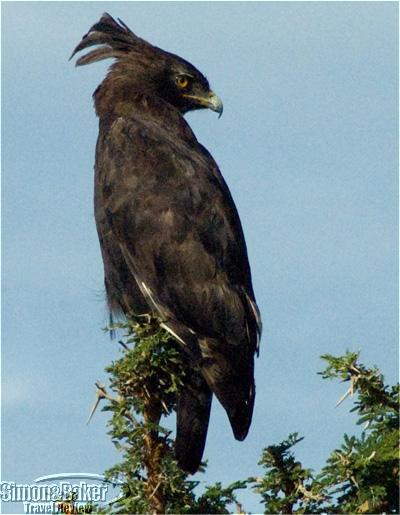
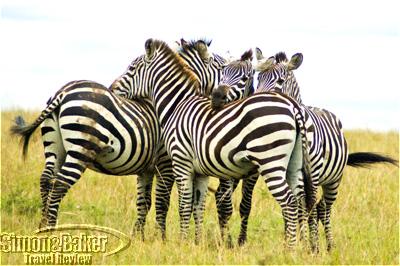
Porini Lion Camp far exceeded any promise its name may have implied! Lions? I had little doubt there’d be lions. The camp was located in the Olare Orok Conservancy, a 23,000 acre (9,000 hectare) private game reserve on the northwest boundary of the Masai Mara National Reserve, which is reputed for its lions. But even at my most optimistic, I hadn’t expected an entire pride of lions, 17 in all, to materialize in the savannah grass 10 minutes into my first game drive! They were rousing from their afternoon siesta, feigning nonchalance as they began to focus on an approaching herd of zebras. I was able to observe the team effort of their stalking process and the zebra’s ultimate narrow escape. We moved on, only to stop again instants later at the edge of a clearing were a breeding herd of elephants was feeding. I was privileged to observe a newborn elephant calf’s first unsteady steps, and its efforts to figure what to do with its unwieldy nasal appendage in its awkward attempt to suckle. A few feet away, its sturdier week-old cousin was trying to uproot a twig, before loosing interest and taking off, puppy-like, in hot pursuit of a bird. By sundown, without leaving the conservancy, we had also sighted buffalos and a leopard for four of the Big Five! We viewed the “fifth’” at close range early the next morning. Shortly after we crossed the boundary of the Masai Mara National Reserve we happened onto a pair of black rhinos engaged in their courtship ritual. But even this exciting sighting was soon overshadowed by a cheetah and her three young cubs enthusiastically tucking into their impala breakfast.
by Editor | Nov 1, 2008 | Africa, Kenya, Simon and Baker Travel Review
Porini is Swahili for “in the wilds.” Nowhere did I find a more vivid proof of it than at the Mara Porini Camp. The intimate luxury camp was nestled in a soaring grove of yellow-barked acacia, within the Ol Kinyei Conservancy, a private 8,500 acre (3,500 hectare) swath of the Serengeti-Masai Mara ecosystem set aside by the local Masai land-owners for the exclusive use of Mara Porini guests. This pristine wilderness of open savannah plains and rolling hills, riverine forest, permanent streams and spectacular views across the Masai Mara was home for the broad variety of species for which the park is famous, including resident big cats.
by Editor | Nov 1, 2008 | Africa, Kenya, Laikipia, Simon and Baker Travel Review
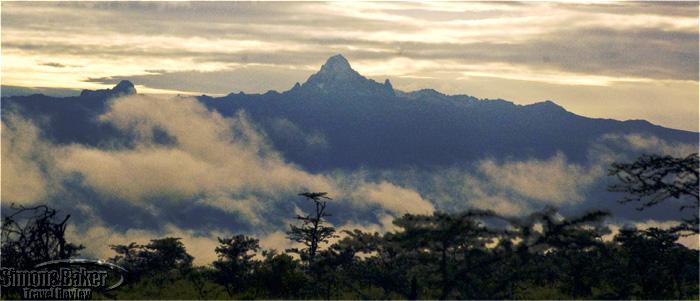
Porini Rhino Camp was located within the 90,000 acre (365 square kilometer) Ol Pejeta Conservancy, on a verdant plateau between the foothills of the Aberdares Range and the stately snow-capped peak of Mount Kenya. Although the area was on the equator, the altitude (around 6,500 feet or 2,000 meters) made for a temperate climate with cool nights, and a landscape of wooded grassland reminiscent of alpine pastures. However, there was nothing alpine about the fauna; game viewing was some of the best East Africa had to offer both in density and variety. Within minutes of entering the conservancy, I had sighted a white rhino, followed in short order by a large journey of reticulated giraffes.
by Editor | Nov 1, 2008 | Africa, Cape Town, Simon and Baker Travel Review, South Africa
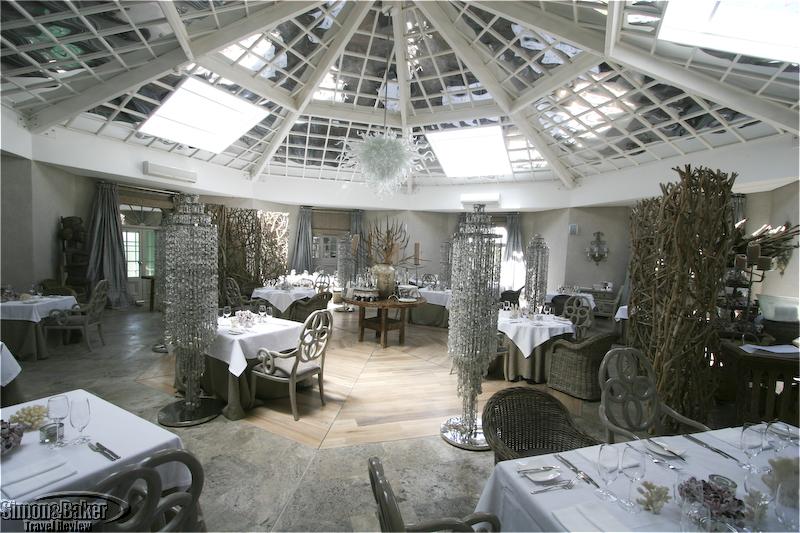
Pure was a joyful discovery. It was tucked away in a pretty and newly renovated hotel in Hout Bay, a small coastal town near Cape Town. While we had been intrigued by the name, it was the recommendation of a fellow foodie that drew us to discover Pure and visit the town overnight.